.png)


What Does Your Future Self Look Like?
- 6 days ago
- 3 min read
Updated: 4 days ago
Are you interested in knowing what you'll look like when you hit 65, around the average age of retirement in the United States?
If so, I invite you to upload a photo of yourself to your AI platform of choice and copy and paste this prompt:
Create a photorealistic age progression of the person in this photo, showing what they might realistically look like at age 65. Preserve their recognizable facial structure, eye shape, nose, smile, skin tone, and overall identity. Add natural, age-appropriate changes such as subtle wrinkles around the eyes and mouth, realistic changes in skin texture and facial volume, and naturally graying hair. Keep them healthy, vibrant, and recognizable, not dramatically or stereotypically aged. Maintain the same general expression and a natural photographic appearance.
What was your result?
Maybe you see the resemblance. Maybe you don't. It's no secret that AI is still working on its image-generation game.
But for a minute, let's pretend the person staring back at you really is future you.
Are you investing in that person today?
Nearly fifteen years ago, researchers wondered what decisions we would make if we could 'meet' our future selves. In a series of experiments, participants interacted with digitally aged versions of themselves and were then asked to make decisions about saving for retirement. In one experiment, participants who saw their future selves allocated about 30% more of their pay toward retirement than participants who saw their current selves.
The researchers suggest that the difference can be attributed to future self-continuity, or how connected we feel to the person we will become.
Our future selves can sometimes feel like strangers. We know they're out there, but it's difficult to make sacrifices today for someone we don't quite know yet. Remember when You Only Live Once (YOLO) was plastered across T-shirts everywhere in 2011? (Shoutout to Drake.) Or the more recent TikTok trend encouraging us to spend the money, book the trip, and have the experiences while we're young? Both are singing the same tune: Who cares about future me? I'm living for today!
But what happens when future you doesn't feel quite so much like a stranger?
The research suggests that seeing an aged version of ourselves can strengthen our connection to that future person and influence at least some of the decisions we make on their behalf.
After reading this study, I couldn't stop thinking: what else might we do differently if we felt more connected to the person we're becoming?
When I saw the AI-generated version of myself, I had the urge to take care of the person I am today, so I could someday meet her. I felt a little more motivated to wake up for my morning workout, hit my protein goals, do a little extra yoga, and put on my daily sunscreen. I wanted to make her proud. (Admittedly, I think AI was a little generous with how gracefully I’m going to age, but I’ll take it.)

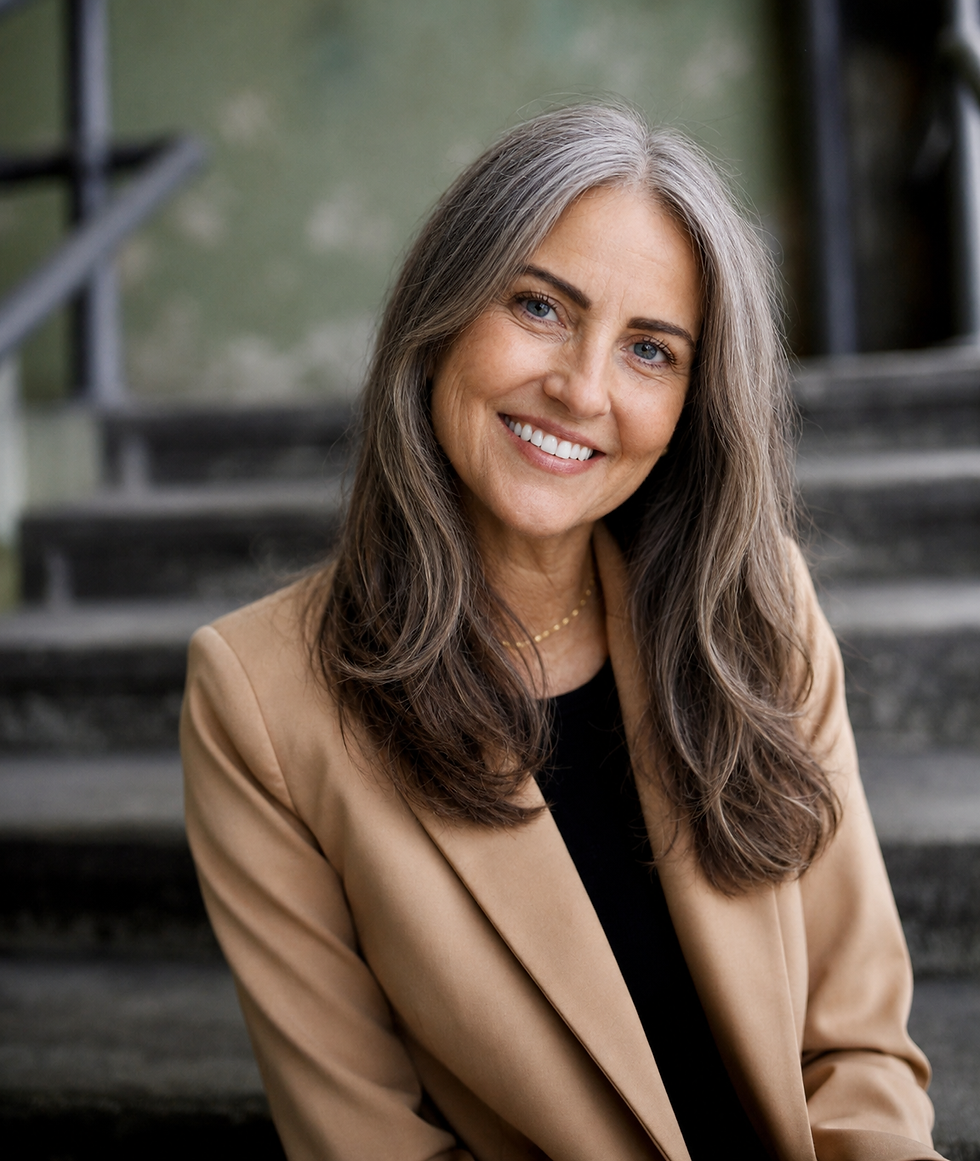
We talk a lot in psychology and personal development about our younger selves. People are often encouraged to think about their inner child, heal them, protect them, or become the person they needed.
But maybe there's value in looking in the other direction, too. What if we also developed a relationship with the person we're becoming? This particular study doesn't tell us that looking at an AI-generated 65-year-old version of ourselves will make us exercise, eat differently, nurture our relationships, finally start the business, or make the career change.
But I can't help wondering whether feeling more connected to future us could change some of the choices we make for them today.
I don't think we should sacrifice the present in pursuit of some perfectly optimized future. My personal philosophy is that every day we get closer to becoming that older version of ourselves is a gift worth celebrating.
But if we're lucky enough to someday meet the 65-year-old staring back at us in that AI-generated photo, what kind of life do we want to hand them? Could feeling more connected to our future selves help us design more meaningful and fulfilling lives today?
I don't have the research to answer that question...yet. But maybe there's a future study hiding in here somewhere!
Until someone figures it out, I say we conduct a little experiment of our own.
Take a look at your future self.
What are you willing to invest in them today?
Hershfield, H. E., Goldstein, D. G., Sharpe, W. F., Fox, J., Yeykelis, L., Carstensen, L. L., & Bailenson, J. N. (2011). INCREASING SAVING BEHAVIOR THROUGH AGE-PROGRESSED RENDERINGS OF THE FUTURE SELF. JMR, Journal of marketing research, 48, S23–S37. https://doi.org/10.1509/jmkr.48.SPL.S23
Find one thing that brings you joy today.


Comments